Between the Buttons: The Rolling Stones Leave the Blues Behind
Released in January 1967, Between the Buttons was the fifth studio album from The Rolling Stones - and a fascinating snapshot of a band in the middle of a major transformation. Just a year earlier, the Stones had released Aftermath
, their first album made entirely from original songs by Mick Jagger and Keith Richards. By 1967, the band was moving further away from its early blues and R&B roots and embracing the colourful, experimental world of 1960s British pop.
If Aftermath
showed that the Stones could write their own material, Between the Buttons
showed just how far they were willing to take it.
In fact, this may be the most overtly pop
album in the entire Rolling Stones catalogue.
The Sound of Between the Buttons
Between the Buttons
is one of the Stones' cleverest, quirkiest and most colourful records. It captures the strange, exciting atmosphere of Swinging London in the mid-1960s, when British pop music was becoming increasingly adventurous.
Much of that transformation comes courtesy of Brian Jones.
Jones largely put his guitar aside and explored a remarkable collection of instruments, including marimba, vibraphone, accordion, kazoo and even the theremin. His contributions give the album an unusual, almost psychedelic texture.
Rather than sounding like the raw blues-rock of the early Stones, Between the Buttons
occasionally feels closer to the eclectic pop of The Beatles or the eccentric music-hall influences of The Kinks.
The production is polished, the arrangements are playful and the songwriting is packed with character. The Stones hadn't abandoned their identity - they were expanding it.
The Hits: Ruby Tuesday
and Let's Spend the Night Together
Every great Rolling Stones album needs a classic song or two. Between the Buttons
has two.
Released together in January 1967 as a double A-side single, Let's Spend the Night Together
and Ruby Tuesday
reached No. 4 on the UK singles chart.
Let's Spend the Night Together
is the obvious rocker: fast, energetic and loaded with the rebellious attitude that made the Stones so dangerous in the first place. It's a thrilling snapshot of the band's youthful energy at the height of 1960s pop culture.
Then there's Ruby Tuesday
, which couldn't be more different.
It's a beautiful, melancholic ballad and one of the most distinctive songs in the Rolling Stones catalogue. The real star is Brian Jones' whimsical alto recorder melody, which gives the track an almost dreamlike quality.
Together, the two songs demonstrate exactly what makes Between the Buttons
so interesting: the Stones could still rock, but they were increasingly fascinated by everything else they could do.
Filler or Killer? Digging Into the Album Tracks
The best thing about Between the Buttons
is how many different musical ideas the Stones squeeze onto one album.
Connection
is a punchy, raw burst of proto-punk power-pop, while Cool, Calm Collected
heads in a completely different direction, mixing fast-paced pop with ragtime piano and a wonderfully ridiculous kazoo.
All Sold Out
feels like a bridge between the Stones' old and new identities. Keith Richards' guitar is pushed into an incredibly bright, treble-heavy tone, giving the instrument a sharp, scratchy and almost piercing sound.
Then there's My Obsession
, a strange combination of garage-pop and avant-garde rhythm and blues. Bill Wyman's thick, muddy bass gives the track a hypnotic weight beneath its unconventional arrangement.
Complicated
might be the perfect example of the experimental side of Between the Buttons. Psychedelic garage-pop, rough-edged rock and shifting arrangements collide to create something that feels almost like a musical collage.
There are also glimpses of the future. Miss Amanda Jones
points towards the more guitar-driven Stones that would emerge in later years. Big chords and intertwined guitar parts from Richards and Jones hint at the classic sound the band would eventually perfect.
The Stones weren't only absorbing British pop influences, either. Who's Been Sleeping Here?
and She Smiled Sweetly
both have a distinctly Dylan-esque flavour, showing how wide the band's musical radar had become.
Something Happened to Me Yesterday: The Perfect Ending
The album finishes with perhaps its strangest track: Something Happened to Me Yesterday
.
It's a chaotic, colourful collision of music-hall vaudeville, ragtime jazz and psychedelic pop. Rather than sounding like a conventional rock song, it feels like a theatrical, slightly drunken celebration.
It's also historically significant for the Stones.
Keith Richards takes a lead vocal part on the song, marking the first time he would sing lead on a Rolling Stones track. That makes the song an important moment in the band's development, even if it sounds completely unlike what most people might expect from the Stones.
And that's really Between the Buttons in a nutshell: unexpected.
Brian Jones at His Creative Peak
If there's one person who dominates the musical character of Between the Buttons
, it's Brian Jones.
Jones was becoming increasingly interested in instruments beyond the standard rock setup, and his willingness to experiment gives the album much of its personality. The marimba on Under My Thumb
had already demonstrated what he could bring to the Stones' sound; here, his imagination goes even further.
The result is an album filled with unusual textures, strange sounds and unexpected arrangements.
It's also worth remembering that this period represents one of the last moments when Jones had such a strong creative role within the band. His later years with the Stones would become increasingly troubled, both musically and personally. On Between the Buttons
, though, his creativity is everywhere.
Why Between the Buttons Deserves More Attention
It's easy to overlook Between the Buttons
when discussing the greatest Rolling Stones albums.
The band's run of classics that followed - Beggars Banquet
, Let It Bleed
, Sticky Fingers
and Exile on Main St.
- naturally dominates the conversation. But judging Between the Buttons
purely against those records misses the point. This isn't the Stones at their most raw, bluesy or swaggering. It's the Stones experimenting.
It's the sound of a band that had mastered songwriting and was now trying to figure out what else it could do. Jagger and Richards were becoming an increasingly formidable songwriting partnership, while Brian Jones was pushing the musical arrangements into unusual territory.
The result is an album that perfectly captures the moment when The Rolling Stones stopped being primarily a blues-cover band and started becoming something uniquely their own.
Final Verdict
Between the Buttons
might be The Rolling Stones at their most pop, but that doesn't make it any less interesting. In fact, its playful arrangements, eccentric instrumentation and willingness to experiment make it one of the most fascinating records in their catalogue.
If you're only familiar with the band's blues-rock beginnings or their later golden-era albums, Between the Buttons
is well worth going back to. It's the sound of The Rolling Stones discovering just how much more they could be.
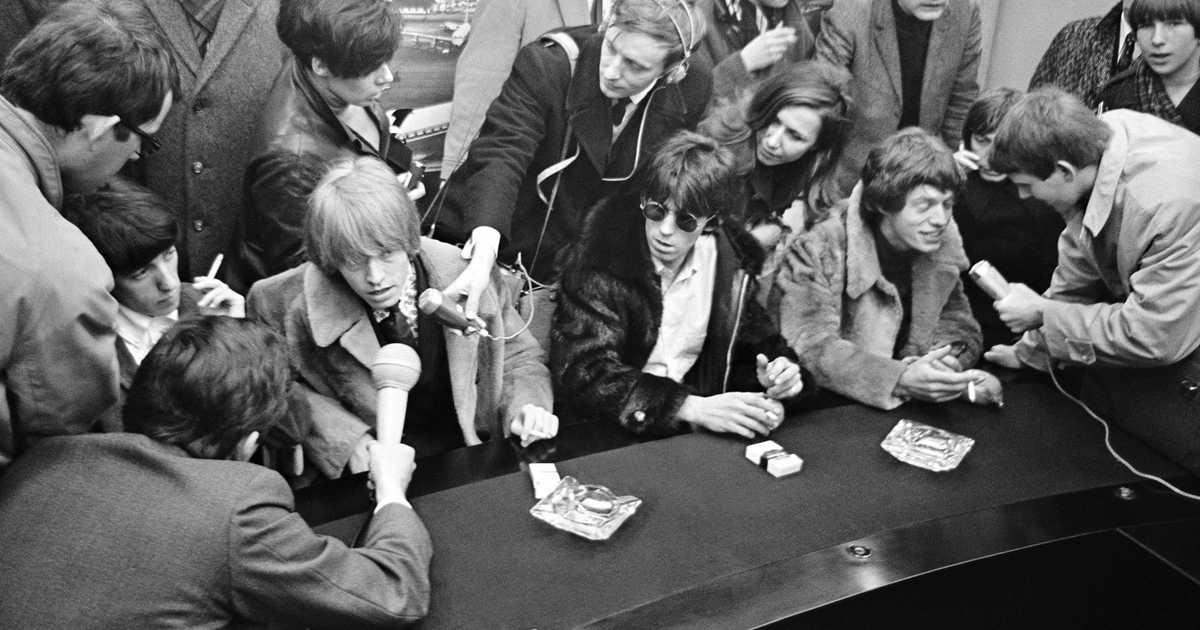
Photo Credit: The Rolling Stones at Schiphol Airport (1966) by Jac. de Nijs / Anefo / Dutch National Archief, via Wikimedia Commons. Licensed under CC0 1.0.