10 Famous Music Managers in Music History
When we talk about music history, we usually talk about the artists: the Beatles, the Rolling Stones, Led Zeppelin, Elvis Presley, Bob Dylan. But behind many of those larger-than-life stars was another personality who could be almost as famous as the artist themselves.
The best music managers weren't simply people who booked gigs and negotiated contracts. They shaped images, fought record labels, spotted opportunities, created controversy and, sometimes, became characters in the story themselves.
Some were brilliant business minds. Others were notorious wheeler-dealers. A few were downright difficult. But all of them left their fingerprints on music history.
Here are 10 famous music managers who became almost as legendary as the artists they managed.
1. Irving Azoff – The Power Broker
If there is a modern definition of the superstar music manager, Irving Azoff is probably it. Azoff became closely associated with the Eagles, whom he began managing in the 1970s, and his management career has included artists such as Steely Dan, Jon Bon Jovi, John Mayer and Gwen Stefani. He also went on to become a major executive and power player in the wider music business.
What makes Azoff particularly famous is that he turned artist management into something much bigger than simply looking after a band's career. He became a formidable industry negotiator and executive, with a reputation for understanding the business side of music as well as anyone. His approach has often been summed up as artist-first, but never afraid of a fight. In an industry where managers can disappear into the background, Azoff became a celebrity in his own right.
2. Tony Secunda – The Publicity Maverick
Tony Secunda was one of those managers who understood that a good story could be just as valuable as a good record. He managed a fascinating collection of artists and bands, including The Move, T. Rex, the Moody Blues, Procol Harum, Motörhead, Steeleye Span and Marianne Faithfull.
He is probably best remembered for his flamboyant, publicity-heavy approach to managing The Move. Secunda wasn't afraid of controversy, publicity stunts or pushing his artists into the headlines. His management of T. Rex also helped Marc Bolan develop his own business interests, including the T. Rex Wax Co. label.
The good? Secunda understood how to generate attention. The bad? His aggressive style could create as many problems as opportunities. Either way, he was never going to be mistaken for an anonymous office manager.
3. Albert Grossman – The Folk Music Mogul
Before the era of rock managers becoming rock stars themselves, there was Albert Grossman, a hugely influential figure in the American folk scene. His clients included Bob Dylan, Peter, Paul and Mary, Janis Joplin, The Band, Odetta, Gordon Lightfoot and Ian & Sylvia.
Grossman was famous for being a tough and highly effective negotiator. His management of Peter, Paul and Mary helped establish the trio as major stars, while his 1962 deal with Bob Dylan placed him at the centre of one of the most important careers in modern music.
He also became known for his larger-than-life personality. Grossman wasn't simply interested in getting his artists onto bigger stages; he wanted better contracts, more control and a bigger slice of the business. For some musicians, he was a formidable protector. For others, he could be intimidating. Either way, Albert Grossman
became a name that carried weight in the folk and rock business.
4. Andrew Loog Oldham – The Man Who Made the Stones Dangerous
If Brian Epstein helped make the Beatles respectable, Andrew Loog Oldham helped make the Rolling Stones dangerous.
Oldham managed the Rolling Stones during their crucial early years and played a major role in creating their rebellious public image. He deliberately positioned them as the rough, provocative alternative to the clean-cut Beatles.
That's what Oldham is best known for as a manager: turning image into a weapon.
He understood that rock'n'roll wasn't just about the music. It was about attitude, headlines and giving people something to talk about. Oldham also worked as a producer and later founded Immediate Records, which released music by acts including the Small Faces, the Nice and John Mayall.
He eventually fell out with the Stones, but by then the damage—or perhaps the magic—had been done. The band's bad-boy image had become one of the most successful brands in rock history.
5. Malcolm McLaren – Punk's Master of Provocation
Few managers blurred the line between artist and provocateur quite like Malcolm McLaren.
McLaren is best known for managing the Sex Pistols, helping turn them from a chaotic young London punk band into a cultural phenomenon. He understood that punk could be sold not just as music, but as fashion, rebellion, confrontation and media spectacle. His King's Road boutique with Vivienne Westwood became an important part of the visual culture surrounding the movement.
Was he a genius? To many people, yes. Was he manipulative and opportunistic? Absolutely part of the debate.
McLaren's genius as a manager was his understanding of controversy as publicity. The Sex Pistols didn't have to be universally loved. They just had to be impossible to ignore. In that respect, McLaren helped create one of music history's clearest examples of a manager becoming part of the mythology.
6. Peter Grant – The Fifth Member of Led Zeppelin
Some managers work behind the scenes. Peter Grant practically stood on the stage.
Grant is best known for managing Led Zeppelin, but his management career also included Bad Company, The Yardbirds and other acts. He became famous for his fierce loyalty to his artists and his uncompromising approach to promoters, record companies and anyone else standing between his bands and their money.
Grant is often described as the "fifth member of Led Zeppelin", and for good reason. He helped the band secure unusually favourable business arrangements and played a major role in protecting their financial interests and control over their career.
Of course, the Grant legend has a darker side. He had a reputation for intimidation and violence, and his aggressive methods were not exactly what you'd find in a modern management textbook.
But as a rock manager? His impact is difficult to overstate.
7. Don Arden – The Godfather of Rock Management
Don Arden was another manager whose reputation could be almost as intimidating as his clients' music.
Arden managed artists including the Small Faces, Electric Light Orchestra and Black Sabbath, and later worked with his daughter Sharon, who became Ozzy Osbourne's manager.
Arden became known as one of the music industry's most aggressive and feared managers. His nickname, "Mr Big," reflected the sheer force of his personality and business methods.
The positive interpretation is that Arden was fiercely protective of his artists and willing to fight record companies and promoters on their behalf. The darker interpretation is that his methods could be ruthless and, at times, downright frightening.
Either way, Don Arden embodied the old-school rock manager: tough, confrontational and absolutely unwilling to take no for an answer.
8. Allen Klein – The Deal Maker Who Became the Villain
Few names in music management inspire such divided opinions as Allen Klein.
Klein managed or represented major artists including the Rolling Stones and the Beatles, as well as Sam Cooke and other major performers. He became famous for renegotiating record contracts and securing much better financial terms for artists.
That was the good side of Allen Klein.
The bad side is one of the most complicated chapters in rock-business history. His relationship with the Rolling Stones eventually deteriorated, while his appointment as the Beatles' business manager became a major source of conflict, particularly with Paul McCartney. Klein's company, ABKCO, also retained significant rights connected to the Rolling Stones' catalogue.
Klein is therefore remembered as both a brilliant negotiator and one of the most controversial managers in music history. He could get artists more money—but artists sometimes discovered that getting the deal wasn't necessarily the same thing as winning the war.
9. Colonel Tom Parker – The Man Behind the King
You can't make a list of famous music managers without Colonel Tom Parker.
Parker managed Elvis Presley from the mid-1950s until Elvis's death in 1977, overseeing the career of the man who became known as the King of Rock'n'Roll.
Parker's greatest achievement was arguably turning Elvis into a global entertainment brand. He helped secure Elvis's landmark deal with RCA and played an enormous role in shaping his recording, touring and film career.
But Parker's legacy is complicated. He has long been portrayed as a manipulative manager who prioritised money, and his enormous commissions have become part of the legend. More recent scholarship has offered a more nuanced picture, suggesting that Parker was also deeply protective of Elvis and strategically important to his success.
Whatever your verdict, Parker achieved something almost unprecedented: his name became inseparable from the story of his client.
10. Brian Epstein – The Fifth Beatle
At the other end of the management spectrum was Brian Epstein, whose relationship with the Beatles helped transform four Liverpool musicians into the biggest band in the world.
Epstein managed the Beatles, as well as artists including Gerry and the Pacemakers, Cilla Black and Billy J. Kramer and the Dakotas. He first encountered the Beatles at Liverpool's Cavern Club and, despite having no previous experience as an artist manager, signed them and began reshaping their professional image.
Epstein is best known for giving the Beatles a more polished presentation, pushing for a recording contract and helping establish the professional structure around their rapidly growing career. He is often remembered as the fifth Beatle.
His management wasn't perfect—his business decisions around merchandising, for example, have been criticised—but his belief in the Beatles was extraordinary. He died in 1967 at just 32, leaving the band without the person who had been their central manager since their breakthrough.
His story is perhaps the clearest example of the idea behind this entire list: sometimes the manager isn't merely the person behind the artist. The manager becomes part of the legend.
Why Do Some Music Managers Become Famous?
The really fascinating thing about these managers is how different they were.
Brian Epstein was polished and diplomatic. Peter Grant was intimidating. Andrew Loog Oldham was a master of image. Malcolm McLaren understood provocation. Albert Grossman was a tough negotiator. Allen Klein was a deal-making machine. Colonel Tom Parker turned Elvis into a global business. Irving Azoff became an industry power broker.What they shared was influence.
A great manager can decide which record label gets the call, which promoter gets the deal, what an artist wears, where they tour, how much they get paid and, increasingly, how the public sees them.
That's why the history of popular music isn't just a history of musicians. It's also a history of the people who understood how to turn talent into a career.
And sometimes, those people became stars themselves.
Because behind every famous artist, there is often a manager with a story almost as interesting as the music.
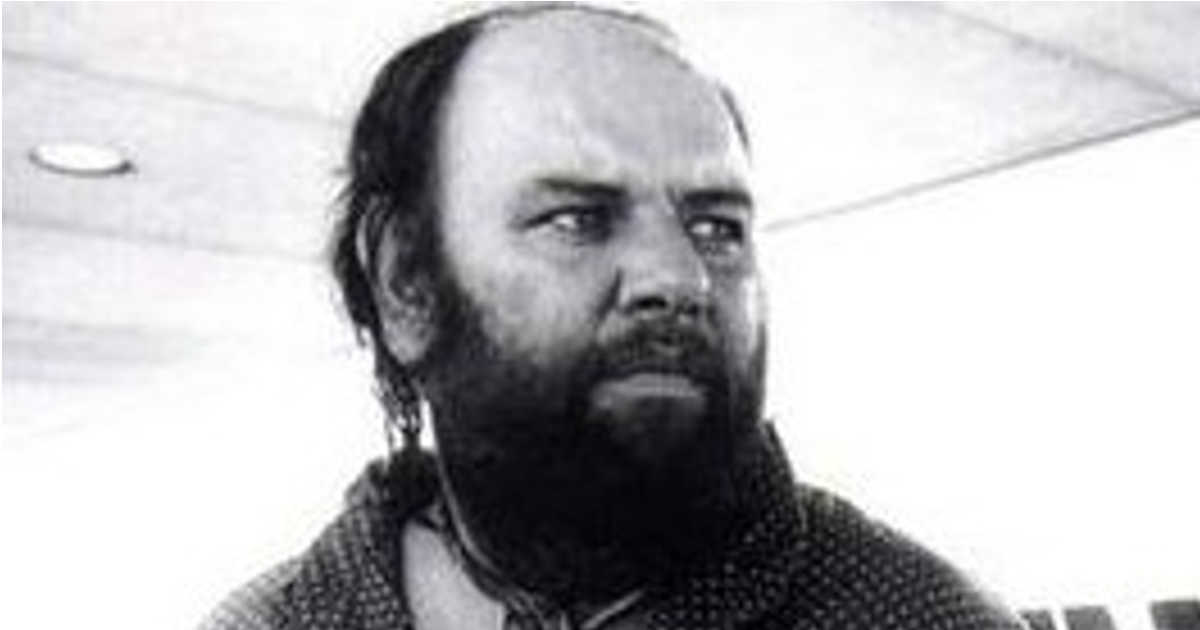
Photo Credit: Peter Grant, circa 1970s. Photo by The rakish fellow. Licensed under CC BY-SA 3.0 via Wikimedia Commons.