10 Essential Thin Lizzy Songs Every Rock Fan Should Hear
Few Irish bands have left a mark on rock music quite like Thin Lizzy. Led by the unmistakable Phil Lynott, the Dublin band created a sound that could be tough one minute and surprisingly tender the next, mixing hard rock, blues, soul and traditional Irish influences with some of the finest twin-guitar harmonies ever committed to tape.
And then, of course, there was Lynott himself. A brilliant songwriter and natural storyteller, he could write about outlaws, heartbreak, street characters and late nights with the same easy charm. Add Brian Downey's superb drumming and a revolving door of outstanding guitarists including Eric Bell, Brian Robertson, Scott Gorham and Gary Moore, and you have a back catalogue that still sounds remarkably fresh.
Trying to narrow Thin Lizzy down to just ten songs isn't easy. You could make a strong case for Emerald, Black Rose, The Rocker, Sarah, Chinatown and plenty more. But if you're discovering the band for the first time — or just fancy putting together a seriously good Thin Lizzy playlist — these ten tracks are essential listening.
Waiting for an Alibi – 1979
Released as a single in February 1979 and later included on Black Rose: A Rock Legend, Waiting for an Alibi catches Thin Lizzy at their slickest and most powerful. With Gary Moore joining Scott Gorham on guitar, the track has a harder edge than much of the band's mid-'70s material, driven along by Phil Lynott's bass and those razor-sharp guitar lines. It's classic late-period Lizzy: melodic enough to lodge itself in your head but with plenty of muscle underneath. The single reached the UK Top 10 and Irish Top 10, and it became a regular part of the band's live set. Among Lizzy fans, the Black Rose era is often a favourite precisely because of that combination of Lynott's songwriting and Moore's fiery guitar playing, and Waiting for an Alibi is one of the finest examples of it.
Still in Love with You – 1974
If you want proof that Thin Lizzy were about far more than hard-rock riffs, Still in Love with You is a good place to start. First released on the 1974 album Nightlife, it's essentially a slow blues, with Phil Lynott delivering one of his most vulnerable vocal performances. Gary Moore played guitar on the original recording, but the song would take on a life of its own on stage as successive Lizzy guitarists put their stamp on it. For many fans, the definitive version is the epic performance on Live and Dangerous, where the song becomes a showcase for everything Thin Lizzy did so well — dynamics, emotion and wonderful guitar playing. It's one of those songs that casual listeners might overlook in favour of the big hits, but longtime Lizzy fans know just how special it is.
Bad Reputation – 1977
The title track from Thin Lizzy's 1977 album Bad Reputation sounds exactly like its name suggests. Tough, swaggering and slightly dangerous, it's built around a hard-rock groove, Scott Gorham's guitar work and a particularly powerful performance from Brian Downey behind the drums. The song also appeared as the B-side of Dancing in the Moonlight, released in July 1977, before the album arrived later that year. There are no unnecessary frills here — just a band sounding confident and completely in control. The track has remained a firm fan favourite and has been covered by numerous rock bands over the years, including Foo Fighters. If somebody asks what Thin Lizzy sounded like when they really put the foot down, play them this.
Jailbreak – 1976
That opening riff is enough. Released on the hugely important Jailbreak album in 1976 and issued as a UK single that August, Jailbreak is Thin Lizzy in full cinematic mode. Phil Lynott turns a prison escape into a miniature rock'n'roll movie, while Brian Robertson and Scott Gorham supply the harmonised guitars that were becoming one of the band's trademarks. Musically, it's straight-ahead hard rock with plenty of attitude, but Lynott's storytelling is what gives it that extra character. Alongside The Boys Are Back in Town, it became one of the band's best-known songs and remains a staple of classic-rock radio and Thin Lizzy live sets. Nearly five decades later, the riff still has the ability to make you turn the volume up.
Rosalie – 1975
Rosalie is an interesting one because Phil Lynott didn't actually write it. The song came from American rocker Bob Seger, but Thin Lizzy made it so completely their own that plenty of listeners probably don't realise it's a cover. Their version appeared on Fighting and was released as a single in June 1975. Lizzy toughened the song up considerably, giving it a crunchier hard-rock feel and allowing the Robertson/Gorham guitar partnership to really shine. The studio version is excellent, but Rosalie became something else entirely on stage. Its appearance on Live and Dangerous, combined with Cowgirl's Song, helped turn it into a genuine Lizzy classic. It's still regularly mentioned among fan favourites and is a perfect example of the band's ability to take somebody else's song and make it sound as though Phil Lynott had written it himself.
Don't Believe a Word – 1976
Short, sharp and absolutely packed with attitude, Don't Believe a Word originally appeared on Johnny the Fox and was released as a single in November 1976. It barely hangs around long enough to catch its breath, but that's part of its appeal. The song reportedly began life as a slower composition before being transformed into the punchy hard-rock version we know, with Brian Robertson and Brian Downey helping give it that tougher feel. It became another major hit for the band, reaching No. 12 in the UK and No. 2 in Ireland. Fans have always loved the contrast between the driving music and Lynott's cynical, almost self-mocking lyric. It's over almost before you know it, which generally means there's only one sensible thing to do — play it again.
Cowboy Song – 1976
Thin Lizzy doing a song about a cowboy shouldn't really work as well as it does, but Cowboy Song is one of Phil Lynott's great pieces of storytelling. Written by Lynott and Brian Downey and released on Jailbreak in 1976, it starts quietly with an almost country-style feel before opening into the kind of soaring hard rock that Lizzy did better than almost anyone. An edited version was also released as a US single later that year. Lynott clearly loved the romantic image of the outsider and the wanderer, and Cowboy Song gives him the perfect character to inhabit. Fans particularly love the live versions, where the song often flows beautifully into The Boys Are Back in Town. It's one of those tracks that demonstrates why Thin Lizzy were always a little more interesting than the standard hard-rock band.
Dancing in the Moonlight (It's Caught Me in Its Spotlight) – 1977
Not to be confused with the completely different song of the same name made famous by Toploader, Thin Lizzy's Dancing in the Moonlight is one of the band's most effortlessly cool recordings. Released as a single in July 1977 ahead of the Bad Reputation album, it reached No. 14 in the UK and No. 4 in Ireland. Phil Lynott's instantly recognisable bass line drives the song, but the real masterstroke is the saxophone from Supertramp's John Helliwell, which gives the track a jazzy, late-night feel quite unlike the band's heavier material. It's long been a fan favourite because it captures the other side of Thin Lizzy perfectly: loose, soulful and full of character. It's also further proof that Lynott and company never needed to hide behind loud guitars to write a great rock song.
Whiskey in the Jar – 1972
Before Jailbreak, before the twin guitars and before international rock stardom came Whiskey in the Jar. Thin Lizzy's electric version of the traditional Irish song was recorded in 1972 and released as a single that November, eventually reaching No. 1 in Ireland and No. 6 in the UK. The arrangement combines Irish folk storytelling with rock, while Eric Bell's distinctive guitar melody is instantly recognisable. Interestingly, the band hadn't initially viewed it as an obvious hit; the recording was intended as potential B-side material before the record company pushed for it to become the single. It remains one of Thin Lizzy's most famous recordings and a favourite with Irish audiences in particular. Other rock bands have tackled the song since, most famously Metallica, but there's something about Lynott's voice and Bell's guitar that makes the Lizzy version unique.
The Boys Are Back in Town – 1976
There was never really going to be another song to finish with, was there? The Boys Are Back in Town was released as a single in April 1976 and became the breakthrough hit that transformed Thin Lizzy from a respected rock band into international stars. It reached No. 1 in Ireland, No. 8 in the UK and No. 12 in the US. Musically, everything is in the right place: Brian Downey's swinging drums, Lynott's conversational vocal and, of course, those glorious Robertson and Gorham harmony guitars. But the real magic is in Lynott's storytelling. He doesn't give you the full story; he gives you characters, places and little fragments and lets your imagination fill in the rest. For many casual listeners, this is the Thin Lizzy song, while dedicated fans may have other personal favourites. Either way, its place in rock history is secure. Nearly 50 years after its release, put it on in a packed pub and see how long it takes before somebody starts singing along.
Thin Lizzy's Legacy Lives On
Picking just ten essential Thin Lizzy songs inevitably means leaving some classics behind. Emerald, The Rocker, Black Rose, Sarah, Wild One, Chinatown and Do Anything You Want To could all easily have made the cut.
But that's really the point. Thin Lizzy were never a band defined by one famous single. Dig beyond The Boys Are Back in Town and you'll find blues, folk, soul, hard rock, Celtic influences, beautiful guitar harmonies and, at the centre of it all, Phil Lynott's extraordinary ability to tell a story.
For newcomers, these ten songs are a perfect place to start. For longtime fans, they're probably an excuse to pull out Live and Dangerous again and turn it up far louder than necessary.
And there's absolutely nothing wrong with that.
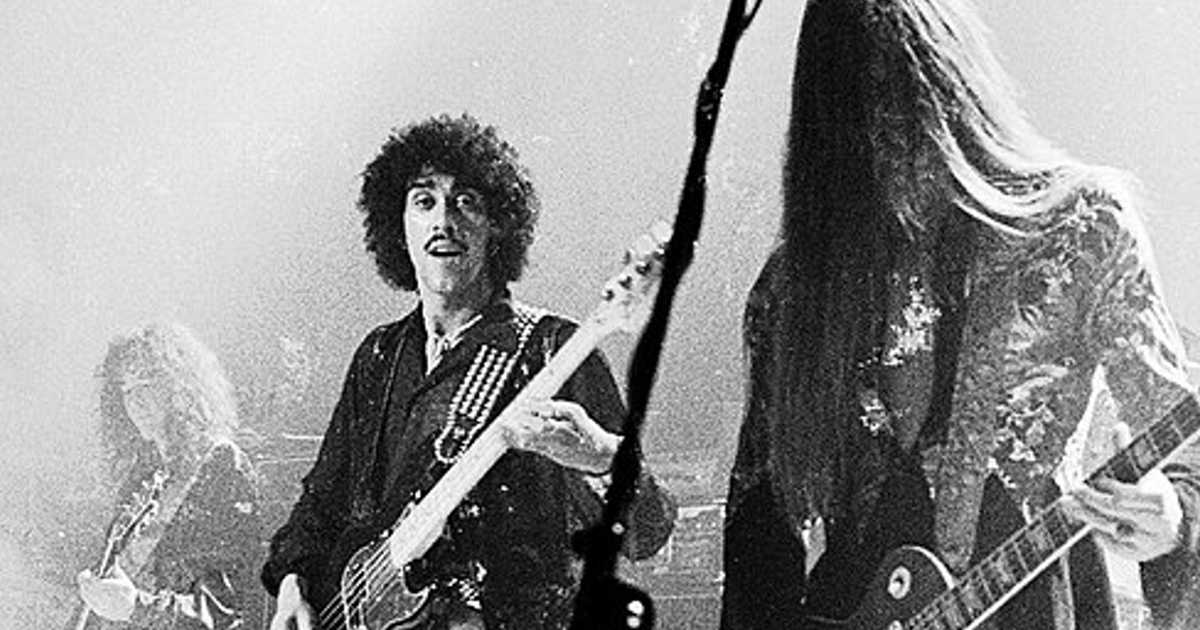
Photo Credit: Thin Lizzy live on the Bad Reputation Tour, 1977. Photo: Richard Marchewka / Wikimedia Commons. Licensed under CC BY-SA 2.0.